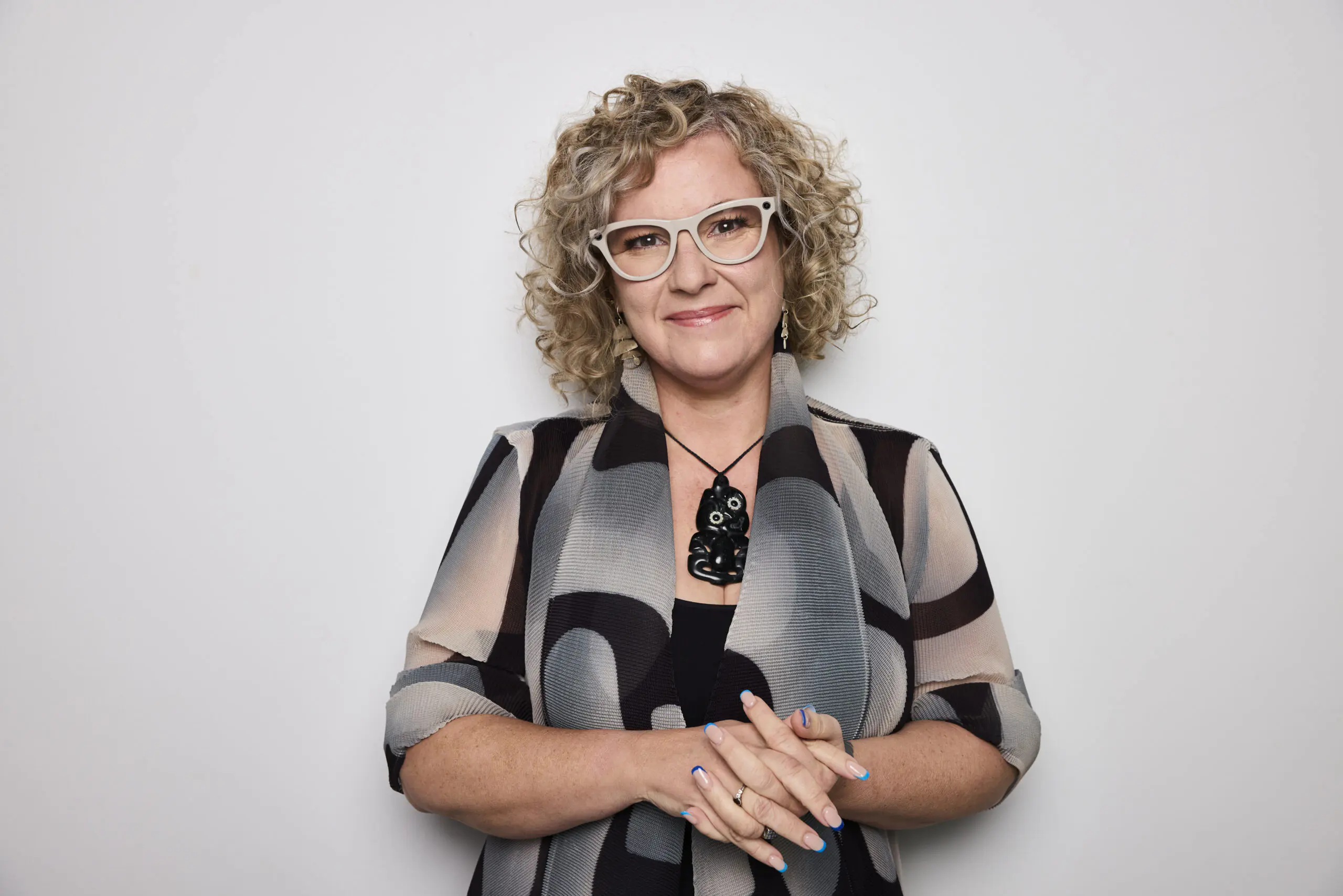
People struggling with their mental health should not feel they have to wait until they reach crisis point before telling someone they are having a hard time, says South Australian Mental Health Commissioner Taimi Allan.
As October marks Mental Health Month, Ms Allan said her three years travelling across South Australia had reinforced just how different the challenges facing individual regional communities could be.
“Probably that you can’t really talk about ‘regional South Australia’ as though it’s one thing,” she said.
“Every place is different. What is happening in Naracoorte or Mount Gambier is not necessarily what is happening in Port Augusta or the Riverland or the Hills.
“Even towns quite close to each other can have very different pressures.”
Ms Allan said what appeared to be a mental health issue could often have practical pressures sitting beneath it.
“The other thing I’ve learnt is that what first looks like a mental health issue often has something underneath it that is much more practical. It might be housing, money, transport, grief, family stress, pain, loneliness, work, or just too many things piling up at once.
“I’ve become much more interested in those underlying things because sometimes they are actually the part we can change.”
She said regional communities often had a strong understanding of who was struggling and where gaps existed.
“And people in regional communities usually know this stuff very well. They know who is struggling, where people fall through gaps, which services people trust, which ones they don’t, and who in the community is holding too much already because they’re the person everyone goes to,” she said.
“A lot of my job has really been listening for those things and then working out, okay, what can I actually do with this? Who needs to hear it? Is there a policy problem here? Is there something another part of government could fix? Is there something already working locally that just needs a bit more support?”
Ms Allan said one of the strengths of country communities was their ability to notice when somebody was not themselves.
“Regional communities are often very good at noticing people.
“Someone hasn’t turned up to work. Someone who is normally at footy every week suddenly isn’t there. Someone comes into the same café every morning and then disappears for a fortnight. People pick up on those things.”
She said people sharing their own experiences could also make it easier for others to speak.
“I’ve also seen some really good examples of people being much more open about their own experience, and that can completely change what happens in a community.
“One person says, actually, I’ve been through this too, and suddenly three other people feel able to talk.”
But problems could emerge when somebody needed support beyond what friends, family, or their community could provide.
“The difficulty is what happens when somebody needs more than that informal support. There can still be long waits, gaps after hours, trouble getting specialist support, and families end up carrying a lot,” Ms Allan said.
“Sometimes people finally ask for help and then hit a closed door or find they don’t meet the criteria for something, and that can be really discouraging.”
She said suicide prevention also needed to look beyond the mental health system.
“With suicide prevention, I think we still tend to arrive too late. By the time somebody is in a full suicidal crisis, there have often been a lot of things happening beforehand.
“Debt, relationship breakdown, housing, alcohol and other drugs, pain, loneliness, losing work, family violence, feeling like a burden.
“So, I think suicide prevention has to sit in all of those places as well. It can’t only sit inside mental health services.”
Ms Allan said periods of distress did not necessarily mean there was something fundamentally wrong with a person.
“I think we make life much harder for ourselves by pretending we’re fine for so long. People go through awful patches. Someone dies. You lose your job. Your marriage falls apart. Your child is struggling. You’re worried about money. You’re exhausted.
“None of that means there is something fundamentally wrong with you. Sometimes life is just really hard.”
She encouraged people to talk about those experiences earlier.
“I’d like people to be able to say that earlier, before it gets to the point where everything has collapsed.
“And I don’t think those conversations need to be particularly formal. You can say to someone, ‘I’m actually having a terrible time at the moment.’ That might be enough to start something.”
For somebody unsure whether professional support was needed, Ms Allan said there was no need to have all the answers before reaching out.
“Yes. Completely. You don’t need to know what is wrong before you talk to somebody. You can just say, ‘I don’t feel quite right,’ or ‘I’m not coping as well as I usually do.’ That could be with your partner, a friend, someone at work, your GP, someone in your community, whoever feels safest.”
While a GP could be a useful starting point, she said professional mental health support was not always the first thing somebody needed.
“But sometimes the first thing you need is not a psychologist. Sometimes you need help with rent. Or sleep. Or grief. Or getting out of the house. Or getting back around people again. That’s why I don’t love the idea that there is one correct front door.
“If you’re struggling, just start somewhere with someone you trust.”
Drawing on her own lived experience, Ms Allan said she wished she had spoken up earlier when she was younger.
“I spent a lot of my younger life hiding how badly I was doing until things got really bad,” she shared.
“I wish I had understood earlier that you don’t have to wait until you are in crisis before you’re allowed to say, ‘I’m not okay.’
“And you don’t have to know exactly what you need either. Sometimes the first thing is just telling one person the truth.”
She said recovery and wellbeing could look different for everyone and changed throughout a person’s life.
“There have been times in my life when professional support has been important.
“At other times, it has been family, making things, exercise, being around people I like, learning something new, getting outside, or doing something that gets me completely out of my own head for a while.
“Those things change over time too.”
Her message to anyone struggling was simple.
“So, if you are struggling, I’d start small. Tell somebody. Let them know what is actually going on. Then work out the next bit from there.”