
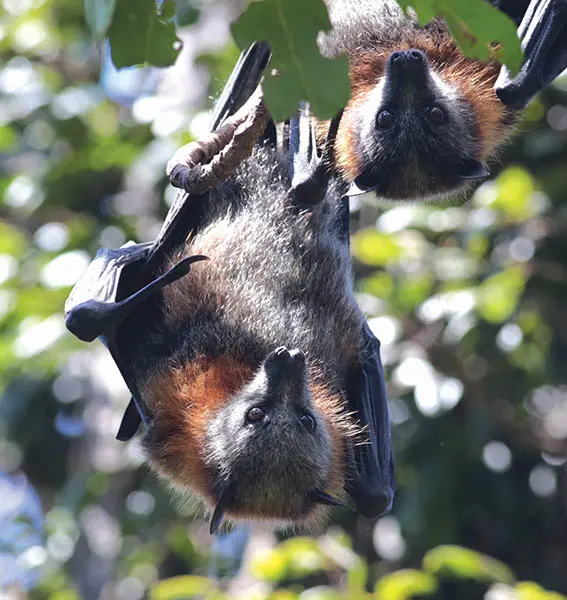
By Chris Oldfield: AROUND 5,000 or so grey-headed flying foxes, often called fruit bats, currently have two main camps – one near Naracoorte and the other around Mount Burr. The flying foxes can carry the deadly Lyssavirus and Hendra virus – anyone scratched or bitten must seek urgent medical attention. Even dead bats are considered too dangerous to touch, particularly as the highly fatal Lyssavirus has been found in SA bat populations. With a wingspan of up to one metre, they can weigh as much as one kilogram. During the day bats can be seen roosting upside down in their “camps”. At dusk they leave their camp to forage for food up to 20 kms away, sometimes much more, returning at dawn. They usually like to feed on nectar from flowering gums. One of the main camps for flying foxes locally is in pines near the Naracoorte Caves. But readers […]
Flying foxes among us

THE LAST ISSUE SUBSCRIPTION
Unable to buy your copy of The News in person? Purchase this week’s issue online.
$2.50

MONTHLY SUBSCRIPTION
Access to a whole month of news to keep updated on what’s going on.
$10.00

ANNUAL SUBSCRIPTION
This one-time purchase allows you to read 49 issues from The News and learn all that is going on in our community.
$120.00
Subscribe to continue reading
If you want to continue reading this and more articles, subscribe to The News

We look forward
to hearing from you!
Contact us to share your stories with our community.

